
Phono Photo, carte grise à Raymond Gervais


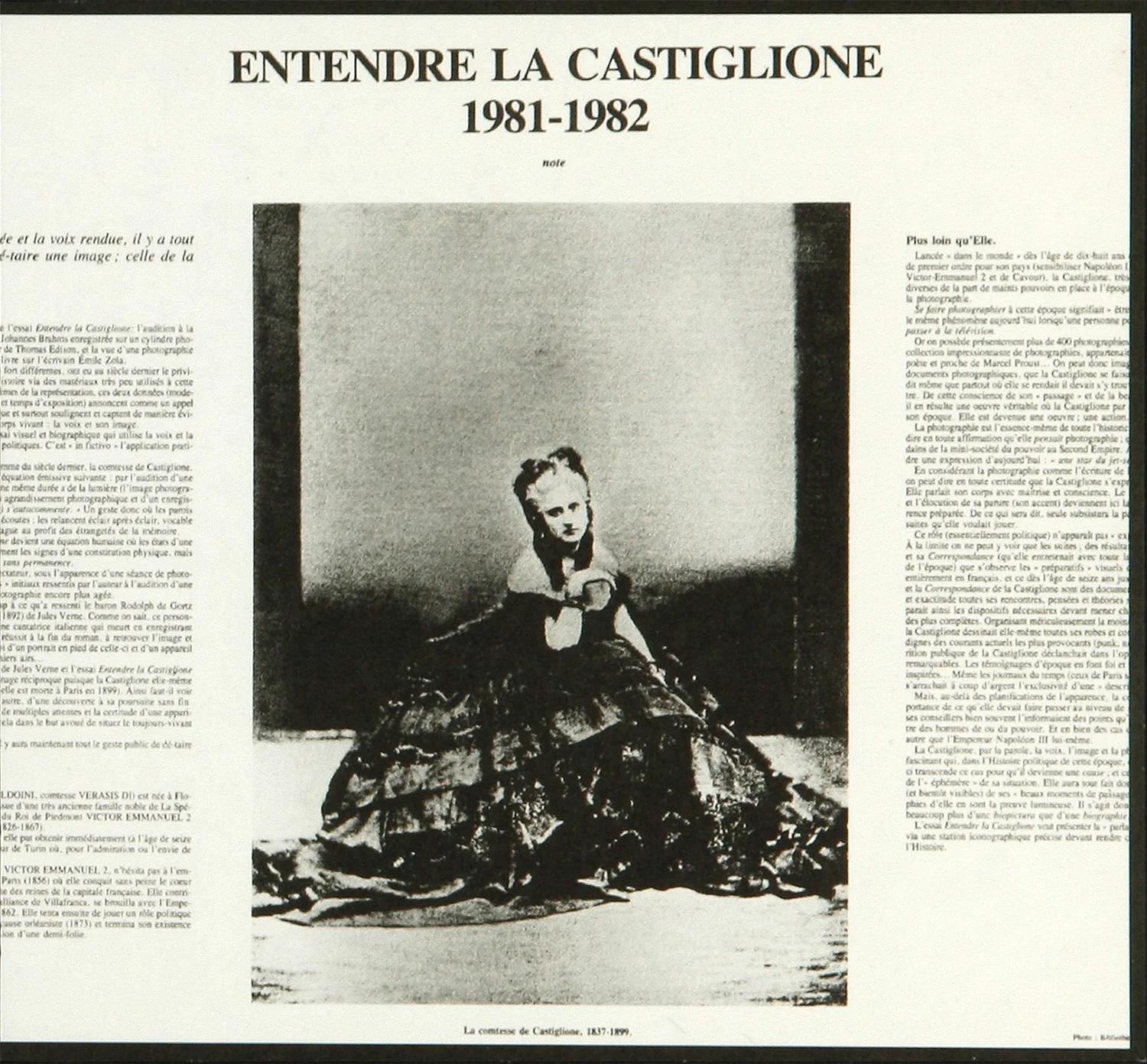
Phono Photo, carte grise à Raymond Gervais
Each year Carte grise, which comprises an exhibition and an accompanying publication, makes it possible for us to discover a specific artist’s view of contemporary photography. Within this framework, Raymond Gervais has decided to speak to us about the relationships between acoustic and visual recordings, and between CDs or vinyl records on the one hand, and photographs on the other as multiples. At the centre of this enterprise is the turntable, an object that presents itself simultaneously as a sort of time machine and an acoustic darkroom. This project suggests that we lend an ear to photography.
Author: Raymond Gervais
Artists: Christian Marclay, Rober Racine, Michael Snow, David Tomas, Richard-Max Tremblay
Edited by France Choinière
Design: Joanne Véronneau
2001
Text in English and French, 52 pages, black and white reproductions, perfect binding
ISBN: 978-2-922135-14-5
Other titles

[Available in French only]
Avec ce livre, deux mondes, plastique et littéraire, se rencontrent. Dans une forme proche de celle du journal, il y est question du corps, du travail de création et de l’étrangeté. Serge Murphy y présente des collages dans lesquels se trouvent des images érotiques, des détails de ses sculptures ainsi que des signes hétéroclites : croquis, morceaux de dessins abandonnés, etc. L’image photographique, insistant sur la dimension temporelle, la quête d’une mémoire, donne à l’ensemble de ces collages la tonalité du journal. En même temps, la photographie est ici employée comme un matériau à bricoler, à voiler, à déplacer, à manipuler. Charles Guilbert y présente, pour sa part, des fragments du journal éclaté qu’il tient depuis une vingtaine d’années. L’intimité, ici, est dévoilée à travers des descriptions de paysages familiers ou étrangers, de personnages, d’œuvres d’art, de moments partagés ou d’intuitions fugitives. Le fragmentaire est exploité dans son pouvoir de suspension et de collision. Les réflexions côtoient les courtes notations ; les lieux et les temps se télescopent pour former un ensemble poétique. Décontextualisés et mis en relation, les éléments des collages de Serge Murphy comme ceux des textes de Charles Guilbert s’intègrent dans une écriture de l’intime et se laissent deviner à travers le débordement, la fantaisie, le désir illimité.
[Available in French only]
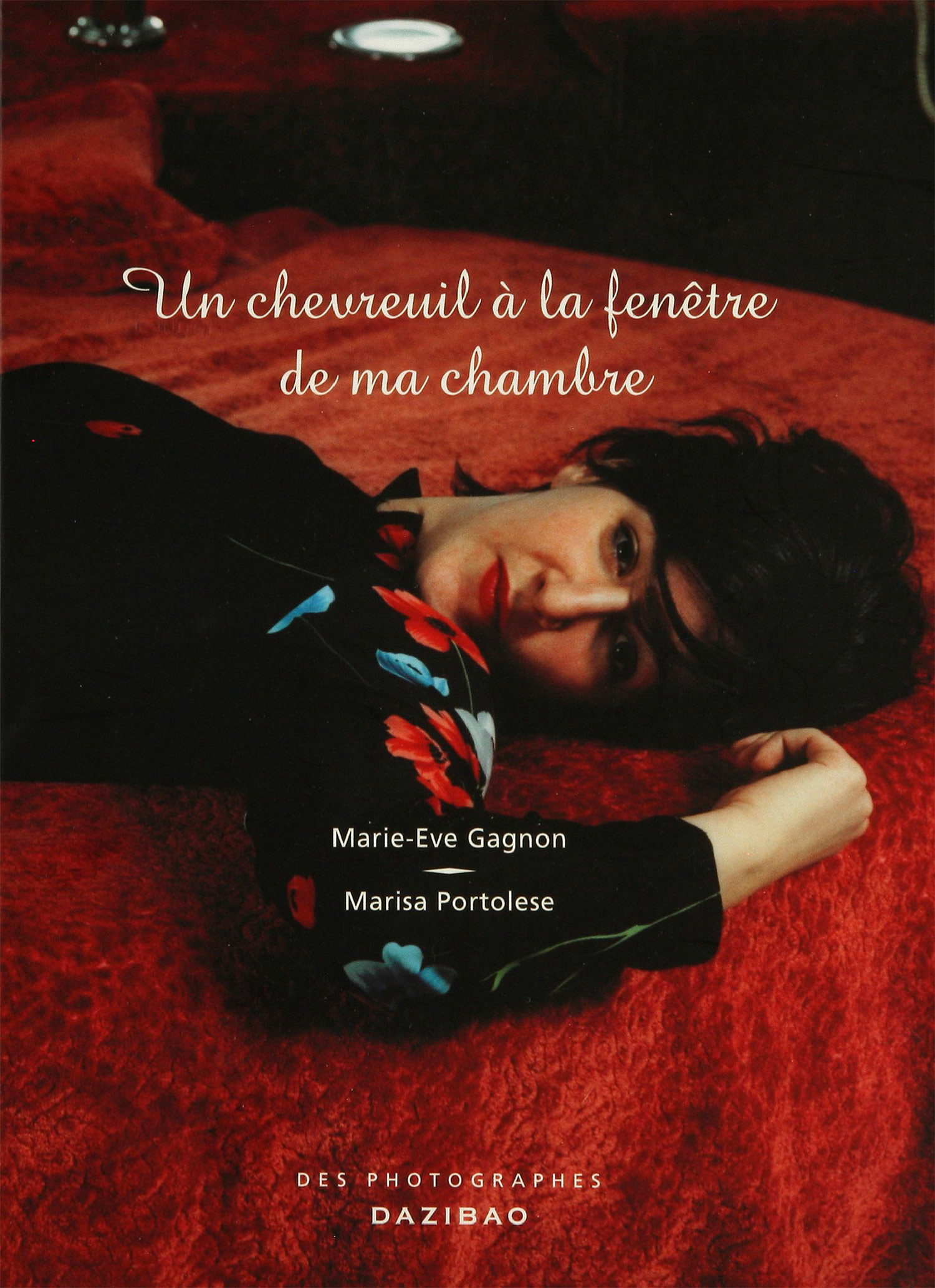
Marie-Eve Gagnon and Marisa Portolese concoct for us a provocative work, entitled Un chevreuil à la fenêtre de ma chambre, around—and through all the twists and turns—of female desire. The artist’s subversive portraits reveal women who fully assume their femininity, their sexuality, and their right to desire and to be desired in attitudes that range from the defiant to the lewd. With her usual biting style, Marie-Eve Gagnon presents Soledad, a young woman whose love-life is full of tribulations and adventures, torn between the instinct for life and the death wish. In order to survive her life, and in the end abandon herself to life, Soledad has to accept that death is always latent and possible.

An unusual publication accompanies the Carte grise à Evergon: a long accordion, spreading out over twenty panels and stored in a case. This original object, which is simultaneously a book, a catalogue, and a work of art, contains reproductions of the works presented in the gallery, on one side, and a written and visual work by Eduardo Ralickas on the other. Breaking down in backwards motion, frame-by-frame, a short film sequence showing a heavy porcelain object shattering on the ground, Ralickas’ work proposes, in its textual component, a collage of theoretical reflections on art and more poetic reflections on gravity, time, etc.

[Available in French only]
In Piercing, Petra Mueller and Larry Tremblay explore the city, theatre of urban landscapes, where everything becomes possible. In a troubling tale, casting Marie-Hélène, a runaway teenager from Chicoutimi, newly arrived in Montréal, Larry Tremblay offers us an unblinking look at adolescence, at those deeply significant, first painful experiences on the brink of emancipation. In Petra Mueller’s images, scattered throughout the text, the city serves as a backdrop to mysterious inscriptions. Each photograph is marked with signs in blue ink, as characters trail their shadows like stains across its surface.