
The Art Gallery Problem
Artists: Kent Chan, Nikita Gale, Matt Nish-Lapidus, Anahita Norouzi, Karthik Pandian, Jeremy Toussaint-Baptiste
Curator: Fraser McCallum
Co-presented with The Blackwood, University of Toronto Mississauga
From February 5 to April 4, 2026
Opening on February 5 at 6 pm
The “art gallery problem” is a well-known math problem with a simple premise: what is the minimum number of guards or surveillance cameras necessary to observe an entire gallery? Across different layouts and floorplans, the art gallery problem challenges math students to achieve full surveillance of a space using the minimum labour or technology. The problem is not put to use by major museums and galleries, despite replicating their standard practices for monitoring facilities. Even so, it remains a dominant understanding of art’s presentation.
This exhibition appropriates the art gallery problem as a framework to consider how objects and bodies are put to work in galleries and museums. The “problem” is in fact not singular: there is far more to the presentation of art than the securitization of objects; there are problems of narrative, representation, hegemony, and access to knowledge.
The art gallery problem highlights a set of underlying assumptions that animate museums and galleries, including surveillance, labour, visuality, law, and ownership. As significant human labour and technologies are mobilized for the preservation and display of objects, it bears asking: Do norms of exhibition and display serve audiences and galleries alike? What are the alternatives to reification, permanence, ownership, and surveillance? What are other ways for living with objects?
-
Two-channel video, 24 min 22 s.
Courtesy the artist.Cast: Urutau Guajajara (Cacique / Chief of the Aldeia Maracanã), Hugo Rodrigues Grativol, Antonio Daniel Bezerra Duarte, Jonathan William dos Santos Lima
Producer: Liz Borges Tibau
Story and direction: Kent Chan
Cinematography: Louise Botkay Courcier
Editing: Kent Chan, Nina Djekić
Music: Raiany Sinara
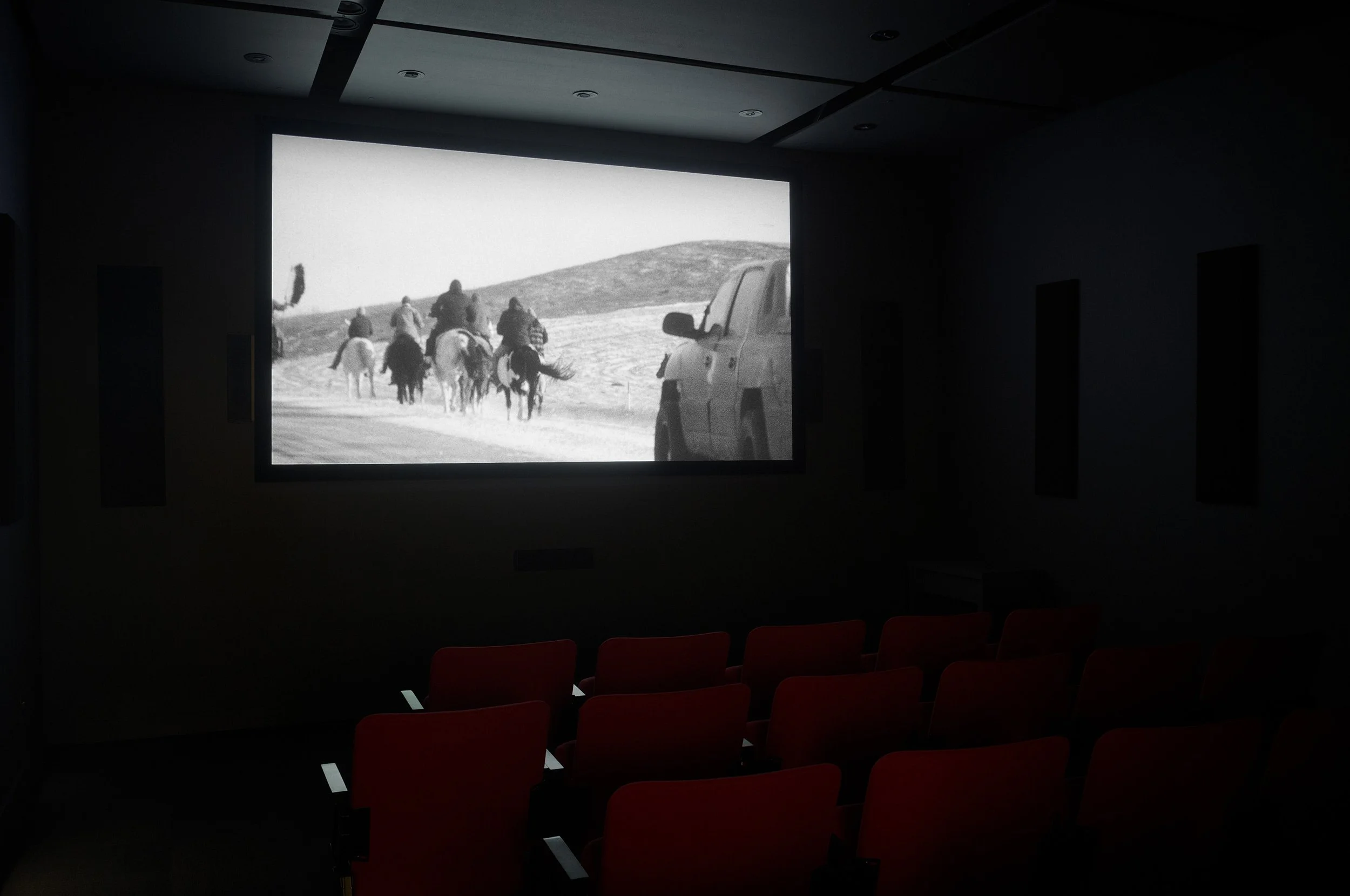
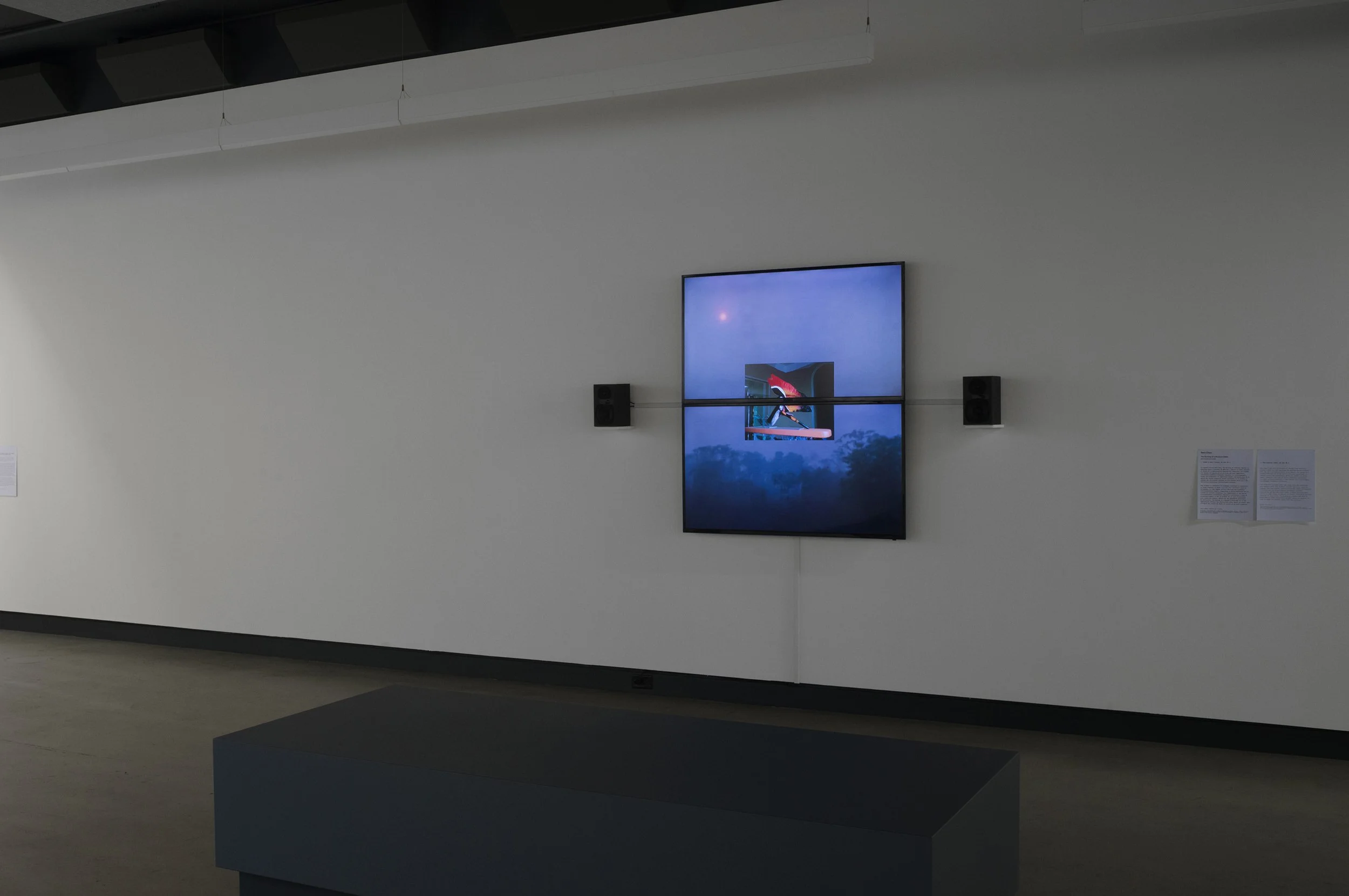
Special thanks: Monica Hoff, Sylvia Monasterios, Juliana Sampaio, Lorenzo CaldanaKent Chan’s new film The Burning of a Museum draws parallels between a 2018 fire that destroyed the National Museum of Brazil with the continued deforestation of the Amazon. The museum fire largely destroyed one of the world’s principal collections of natural history and anthropology, while the rapidly shrinking Amazon represents over half of Earth’s remaining rainforests, including territory belonging to nine nations and 3,344 formally acknowledged Indigenous territories.
Chan proposes a paradigm shift that would reify the rainforest as a museum: rather than a dense, entropic territory, the film suggests that the tropical rainforest provides stable environmental conditions akin to climate control. Consistent seasonal temperatures and daylight hours create a stable ecosystem that results in lower levels of species extinction. Prompted by parallel instances of destruction, The Burning of a Museum asks what it would mean to soften distinctions between nature and culture, in order to align the museum’s values with the rainforest.
Kent Chan is an artist, curator and filmmaker based in the Netherlands and Singapore. His practice revolves around our encounters with art, fiction and cinema that form a triumvirate of practices porous in form, content and context. He holds a particular interest in the tropical imaginary, the past and future relationships between heat and art, and contestations to the legacies of modernity as the epistemology par excellence. His works have taken the form of moving images, text, performances, and exhibitions.
He is a former resident of Gasworks (London), Art Explora (Paris), MMCA Residency Changdong (Seoul), Pivô Research (São Paulo), Jan van Eyck Academie (Maastricht) and NTU CCA Singapore. He has held solo and two-person presentations at Gasworks (London), Kunstinstituut Melly (Rotterdam), Bonnefanten Museum (Maastricht), National University Singapore Museum, and de Appel (Amsterdam).
His works and films have been exhibited in institutions and festivals, including Tate Modern (London), Liverpool Biennial, Videobrasil (São Paulo), International Film Festival Rotterdam, Seoul Mediacity Biennale, Times Museum (Guangzhou), EYE Film Museum (Amsterdam), Onassis Stegi (Athens), and BIENALSUR (Buenos Aires). He is the 2023 winner of the Paulo Cunha e Silva Award and Impart Art Prize, and 2021 winner of Foundwork Artist Prize. His works are collected by the Kadist Foundation, the Rijkscollectie of the Netherlands, Bonnefanten Museum (Maastricht), Galerie für Zeitgenössische Kunst Leipzig, and other institutions.
This project was supported by the Galeria Municipal do Porto, the Pivô - Arte e Pesquisa, the Blackwood Gallery, University of Toronto Mississauga, the Mondriaan Fonds and the National Arts Council Singapore. -
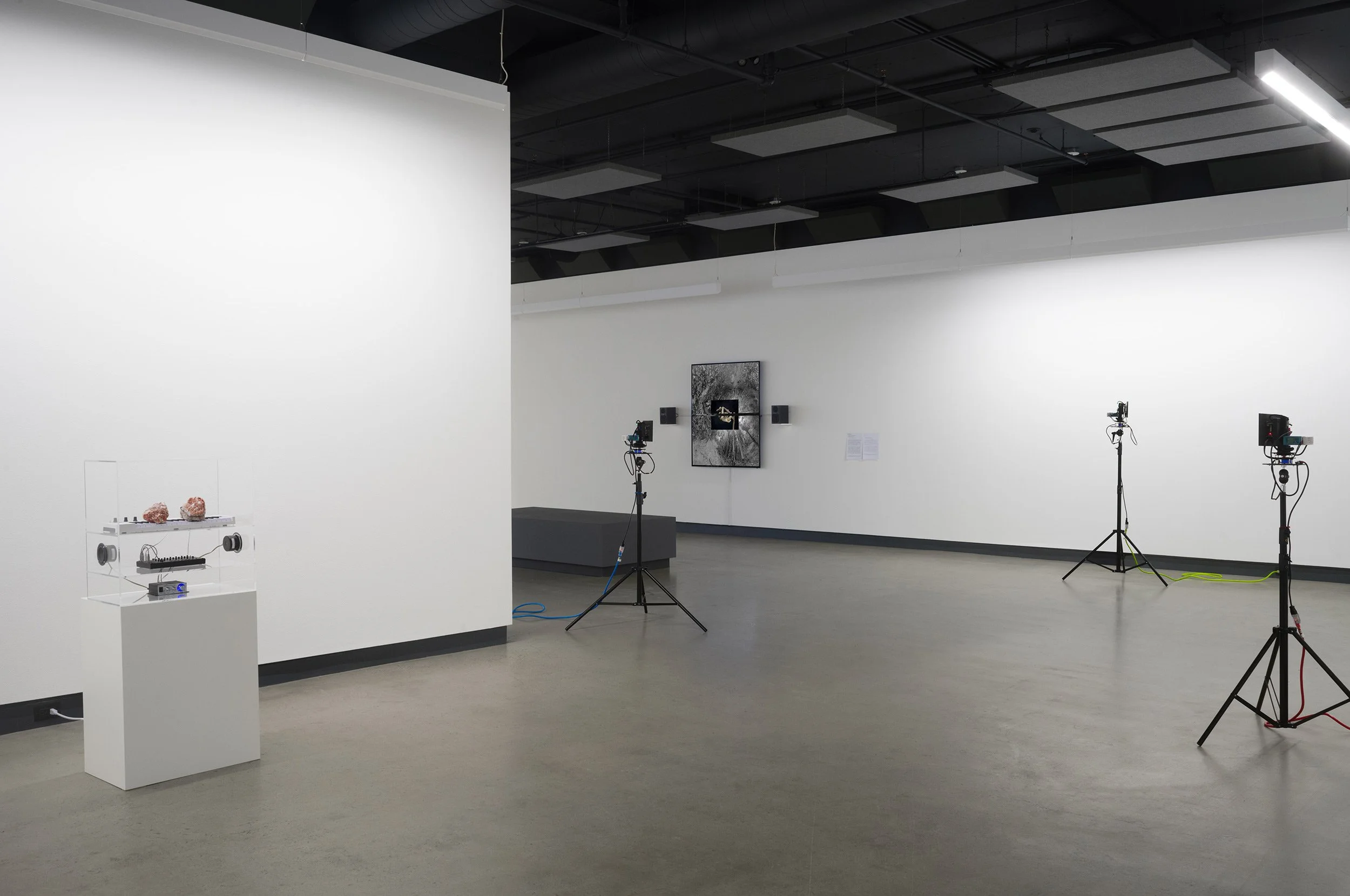
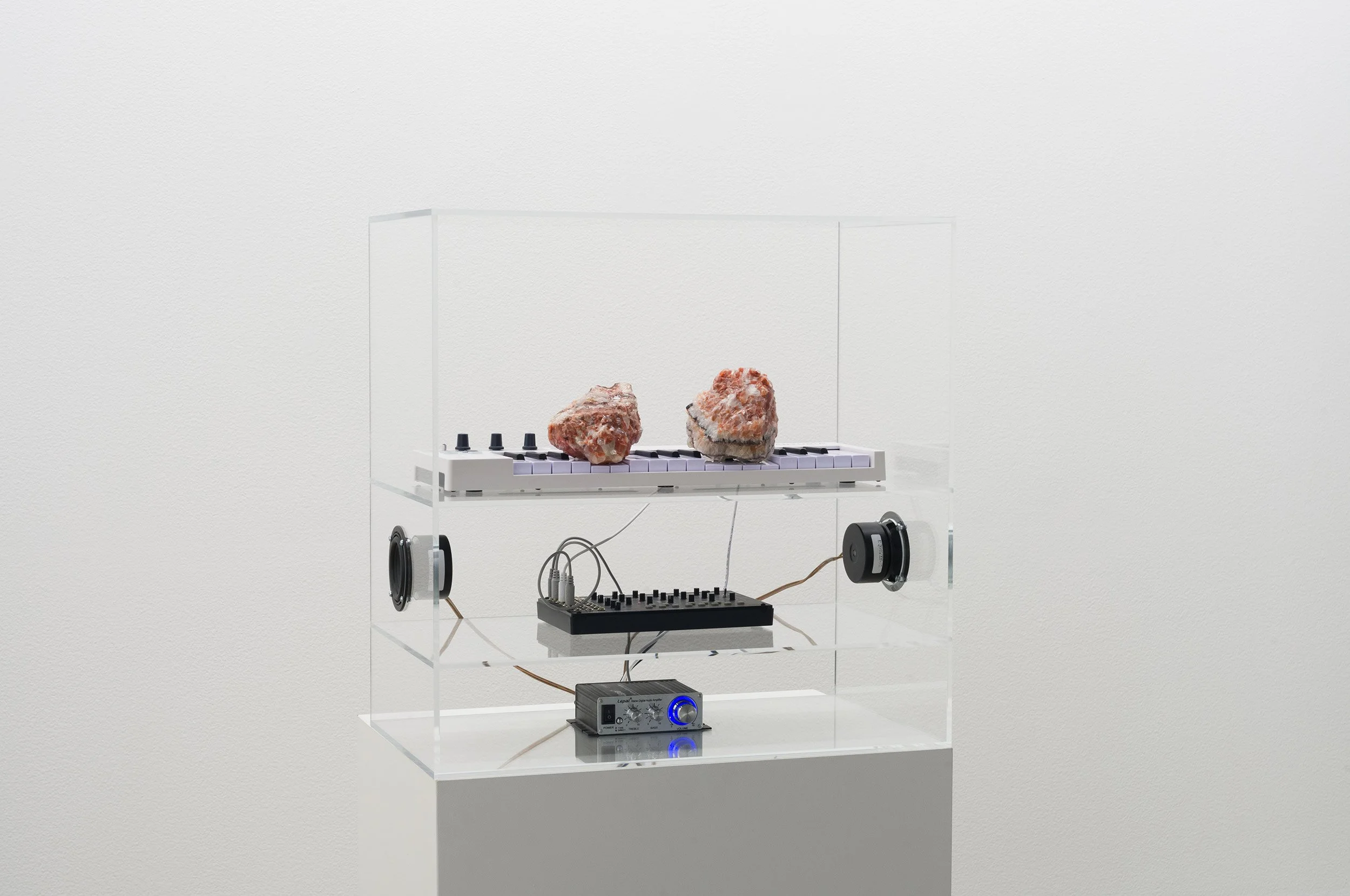
Plexiglass, amplifier, keyboard, synthesizer, speakers, calcite, and stereo audio.
Courtesy Petzel Gallery, New York.In Nikita Gale’s GRAVITY SOLO III (HYPERPERFORMANCE), calcite stones “play” a keyboard with a droning note that discreetly changes over time. Calcite is largely composed of calcium, the fifth most abundant mineral on earth, which also makes up 99% of the human skeleton. Gale’s work gathers irreconcilable actors in a durational performance: human finitude, geologic time, and gravity. In line with the artist’s ongoing interest in performance, its social structures, and its material scaffolds, GRAVITY SOLO stages non-human performers in a performance that long exceeds the scope of human attention.
Nikita Gale is an artist living and working in Los Angeles, California. The artist holds a BA in Anthropology with an emphasis in Archaeological Studies from Yale University and an MFA in New Genres from UCLA.
Gale's work explores the relationship between materials, power, and attention. A key tenet of the artist's practice is that the structures that shape attention determine who or what is seen, heard, recorded, remembered, and believed. Gale’s broad-ranging installations—often comprising concrete, barricades, video and automated sound and lighting—blur formal and disciplinary boundaries, engaging with concerns of mediation and automation in contemporary performance.
The artist’s work has recently been exhibited at the 2024 Whitney Biennial, 52 Walker, MoMA PS1, Swiss Institute, The Studio Museum in Harlem (New York), Chisenhale Gallery (London), Kunstraum Kreuzberg/Bethanien (Berlin), California African American Museum, LAXART and in “Made in L.A. 2018” at the Hammer Museum (Los Angeles). Gale is represented by Petzel, 56 Henry (New York), Commonwealth and Council (Los Angeles), and Emalin (London).
-
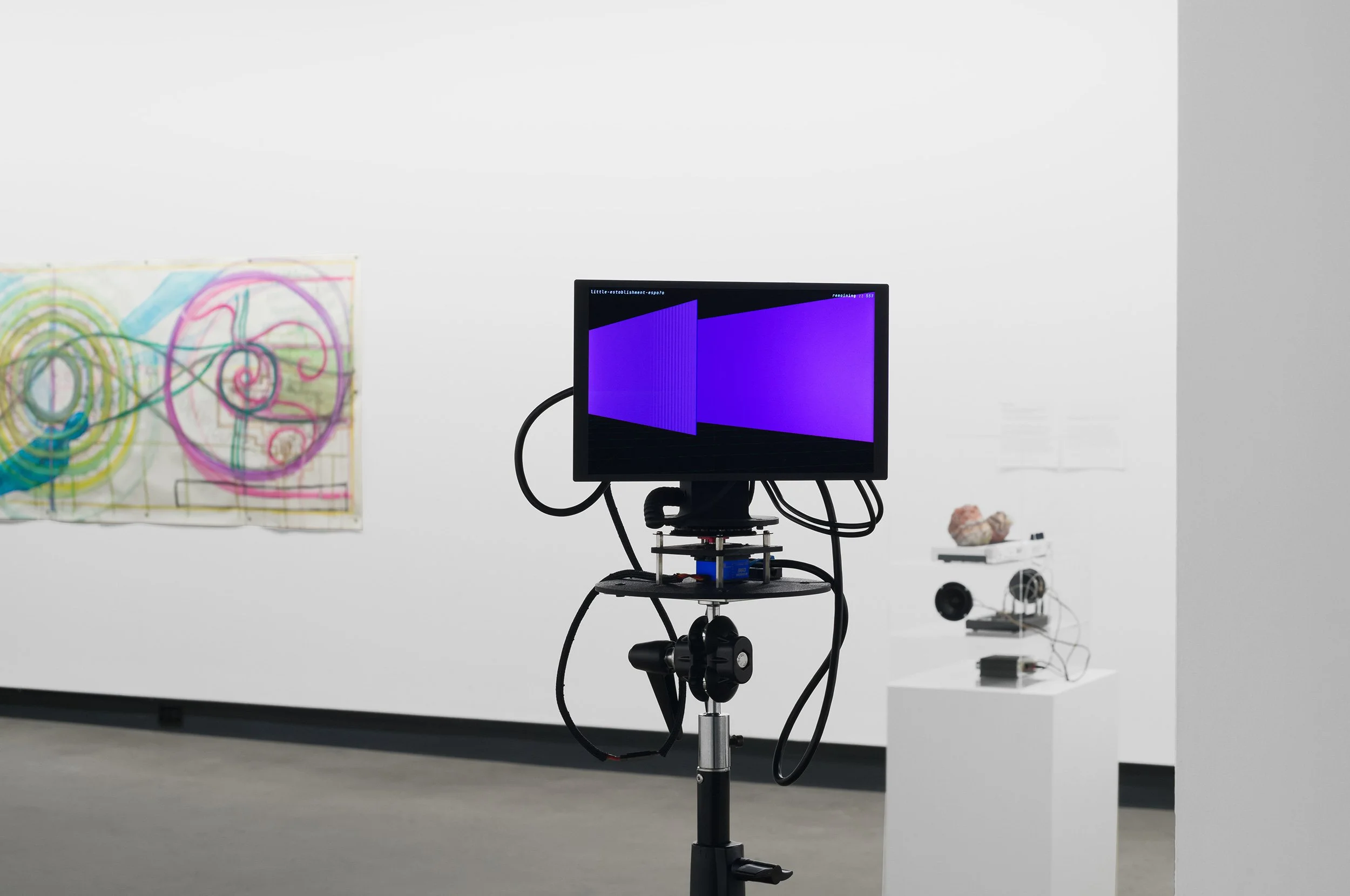
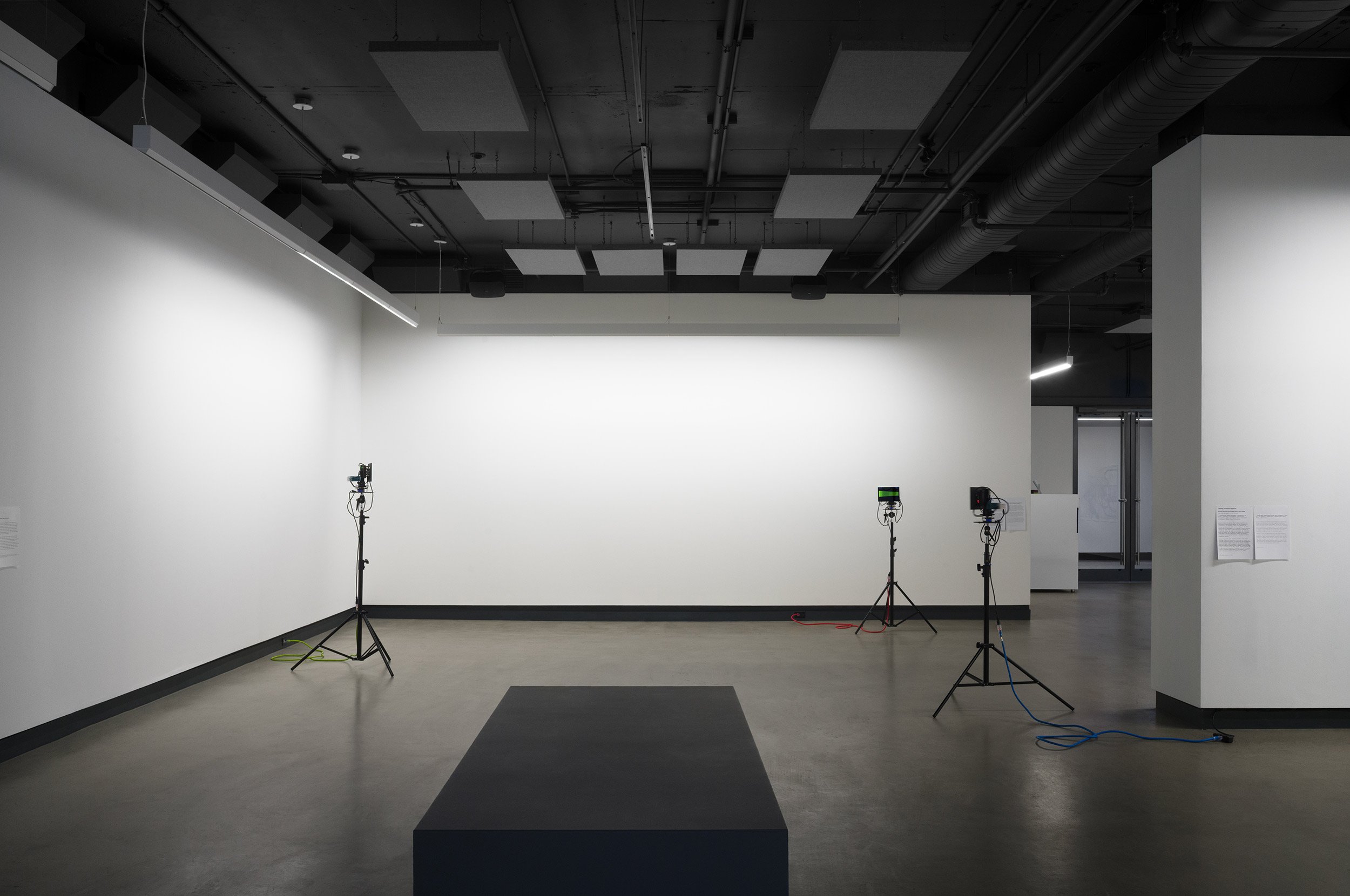
Artist-written software, screens, Raspberry Pis, tripods, cables, and additional electronics.
Commissioned by The Blackwood.
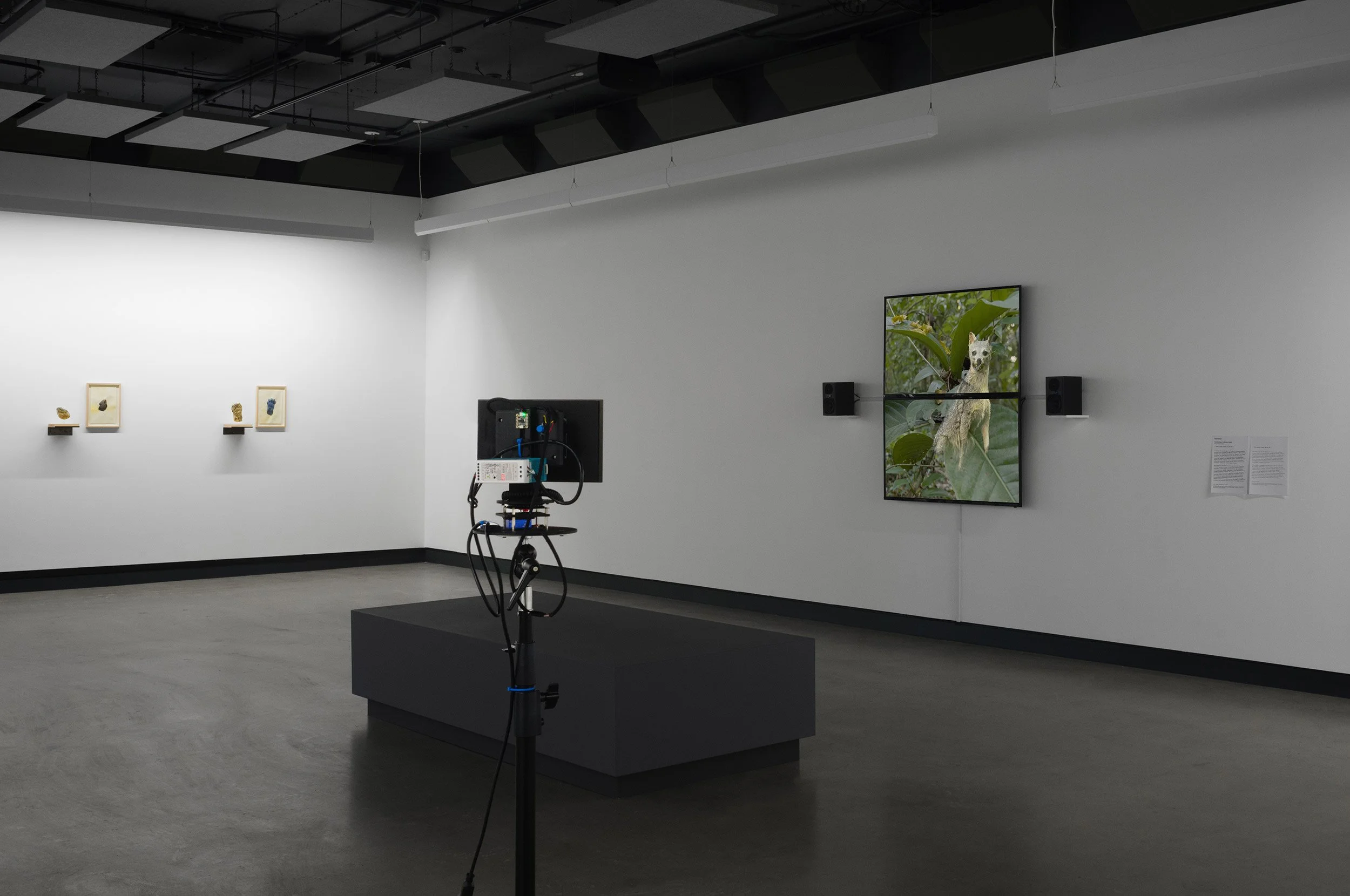
Courtesy the artist.Imaginary Volumes, newly commissioned for this exhibition, simulates the “art gallery problem” using artist-written software and consumer tech. A series of human-scale sculptures serve as proxies for museum guards, outfitted with screens that mimic a surveillant gaze and depict renderings of the gallery. Rather than replicating surveillance technologies, however, Nish-Lapidus inflects his work with flaws and hubris, informed by histories and limitations of computer-aided design.
Nish-Lapidus has created an iterative simulation of an art gallery; in each instance, the gallery’s spatial volumes subtly shift and mutate. With each physical sculpture doubled in the virtual simulation to represent a “guard,” the simulation responds to keep apace with the unstable architecture. The sum effect is one of constant flux, highlighting the inadequacy of mathematic logic to capture the fluidity and nuance of reality.
Nish-Lapidus draws on literary and computational histories that cut across the grain of technological optimism, while adopting the aesthetics of early spatial rendering dating to the 1970s. Inspired by the labyrinthine structures of Jorge Luis Borges, the impossible architectures of Giovanni BattistaPiranesi, and the apprehensions of technological theorist Joseph Weizenbaum, Imaginary Volumes presents the art gallery problem as an irresolvable clash between real and virtual space.
Matt Nish-Lapidus is an artist and musician based in Tkaronto/Toronto. Matt’s varied practice probes the myth that computers should be useful rather than beautiful through examining contemporary technoculture, its histories, and its impacts on society, people, and his own life. His work results in diverse outputs, including publications, recordings, installations, performances, software, and objects.
Matt has performed and exhibited locally and internationally, including MOCA, The Power Plant, InterAccess (Toronto), INDEX Biennial (Braga), ACUD Macht Neu (Berlin), Electric Eclectics (Meaford), ZKM (Karlsruhe), and more, including many DIY community spaces. The artist presence online and away from the screen is also expressed through various aliases and collaborations, including emenel, New Tendencies, and <blink>.
-
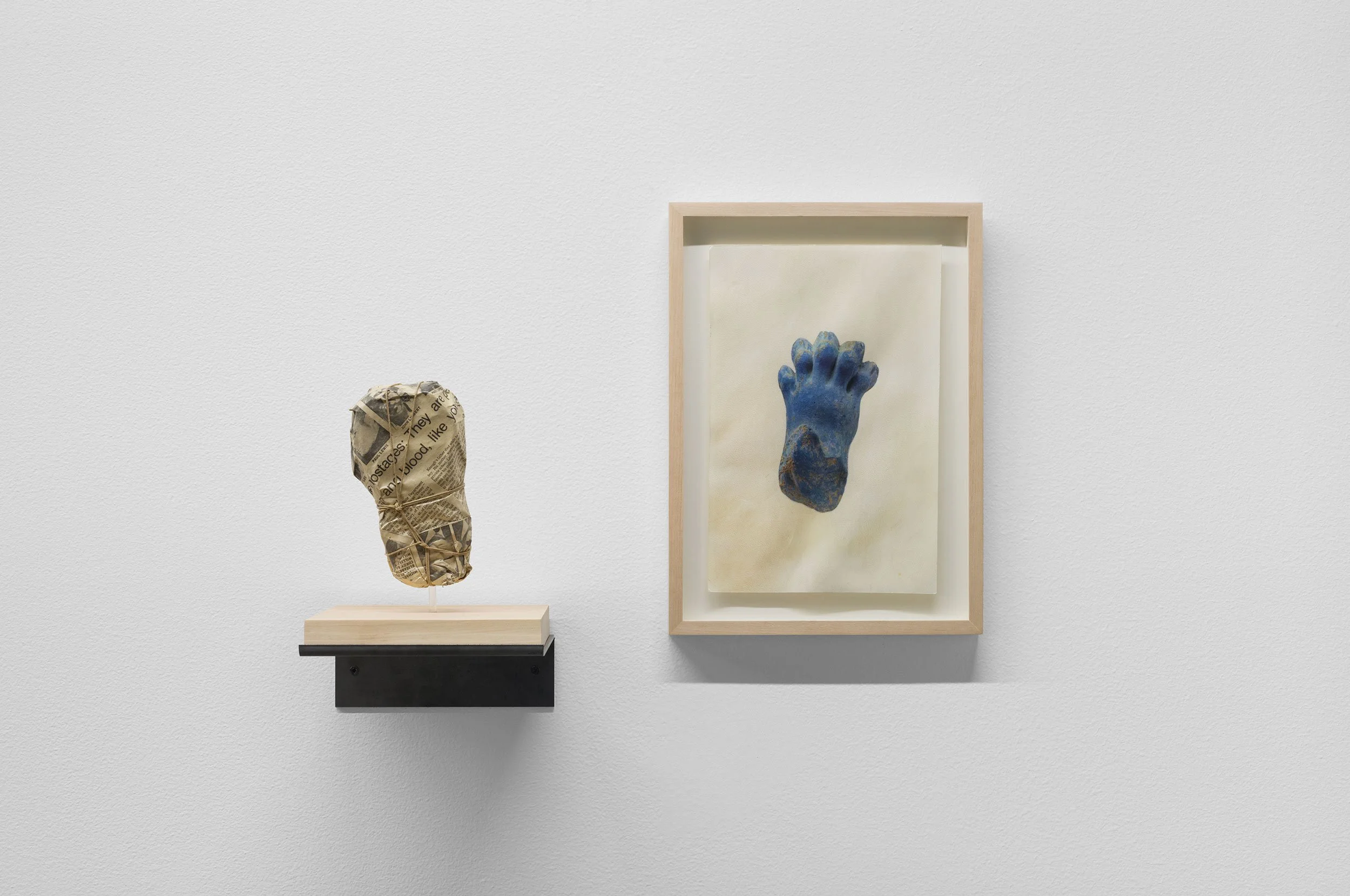
Historical newspapers purchased on eBay, limestone, image-transfer on natural goatskin vellum.
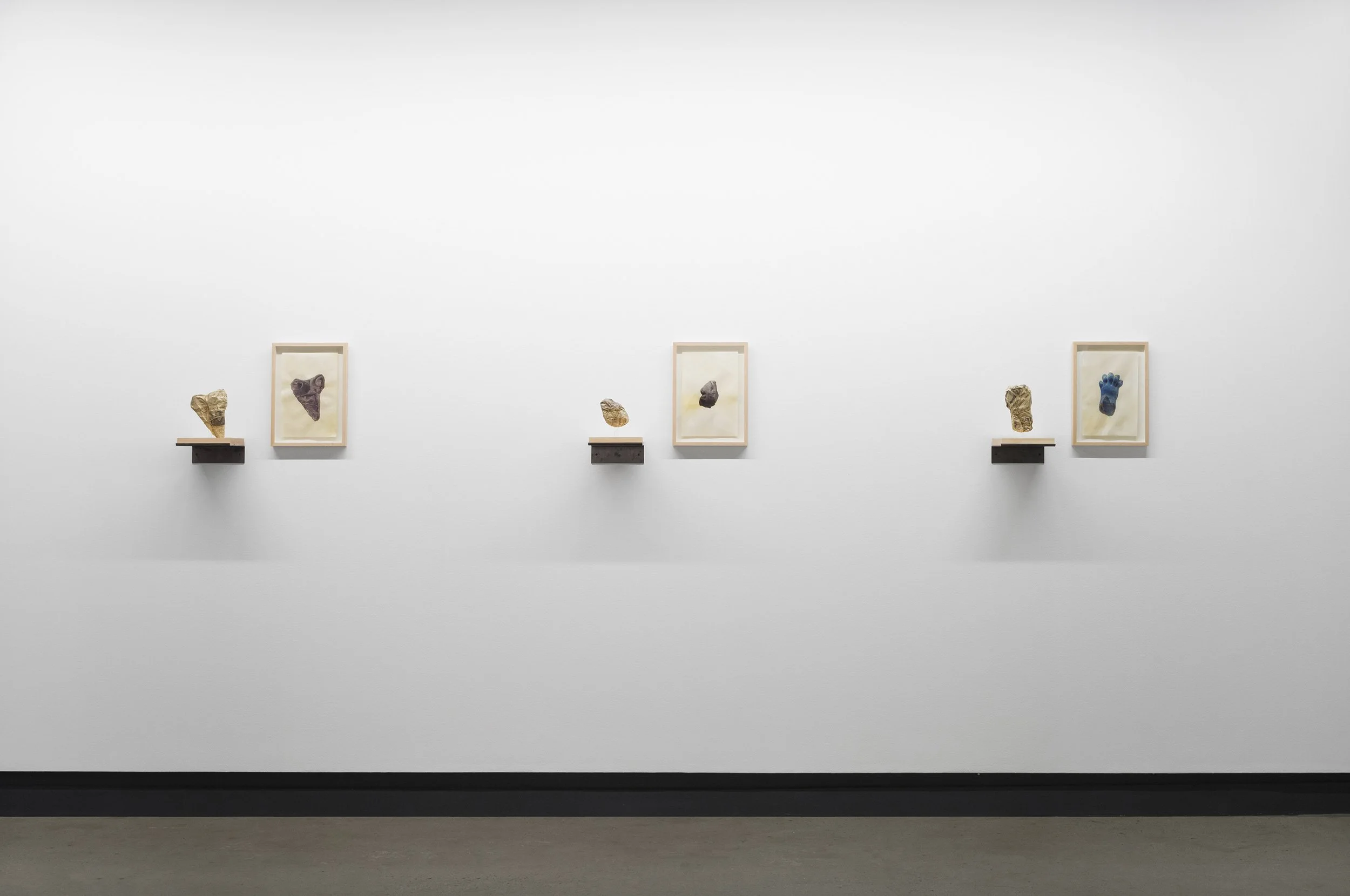
Courtesy of the artist and Galerie Nicolas Robert.This series of works delves into the collection of catalogued artifacts at the Oriental Institute of University of Chicago comprising approximately 350,000 objects from Egypt, Persia, Mesopotamia, Syria, and the Levant.
Made from limestone, the series replicates remnants of excavations from the ruins of Persepolis, held at the Institute. Accompanied by its corresponding image, retrieved from the catalogue records, each object is wrapped in newspaper, mimicking the hasty handling of looted artifacts. The cropped-out transferred images of these fragments on parchment evoke the disappeared undertext and mnemonic traits of the archival and the archaic—the goat skin is used as a material reference to the use of palimpsest as an ancient method of re-inscription. The detachment of distanced objects from their context in the collection is paired with recurring newspaper headlines, chronicling the plight of 52 Americans held hostage by Iranian students at the US Embassy in Tehran between 1979 and 1981.
More than three decades after the return of the American hostages to the US, legal battles have arisen over the pursuit of compensation through the seizure of Iranian assets, among which the collection of Iranian heritage objects was partially at stake. The works shed light on the legal disputes in which victims sought retribution through the proceeds from the sale of Iranian antiquities held at the Institute, a case ultimately ruled against by the US Supreme Court in February 2018.
Anahita Norouzi is a multidisciplinary artist, originally from Tehran and active in Montreal since 2018. Her practice is research-driven and informed by marginalized histories, focusing on themes of resource extraction, colonialism, and the relationship between humans and land. Articulated across a range of materials and mediums —including video, sculpture, installation, photography—her work challenges institutional authority by reclaiming personal narratives and collective memories embedded in archives, museum collections, and herbarium pages, ultimately dissecting how power operates through systems of classification, representation, and historical erasure.
Norouzi’s works have been shown internationally, including BIENALSUR (Buenos Aires), National Gallery of Canada (Ottawa), Montreal Museum of Fine Arts, Royal Ontario Museum (Toronto), and Musée national des beaux-arts du Québec. She has received numerous grants, fellowships, and awards, most notably, the Grantham Foundation Creation Award, the Liz Crockford Artist Fund Award, and the Vermont Studio Center Merit. She is the winner of the Contemporary art award of the Musée national des beaux-arts du Québec (2023) and the Impressions residency at the Montreal Museum of Fine Arts (2022), and finalist of the Magic of Persia Contemporary Art Prize and the Sobey Art Award (2023).
-
மனசு (manasu)
Video, 22 min
Courtesy the artist.
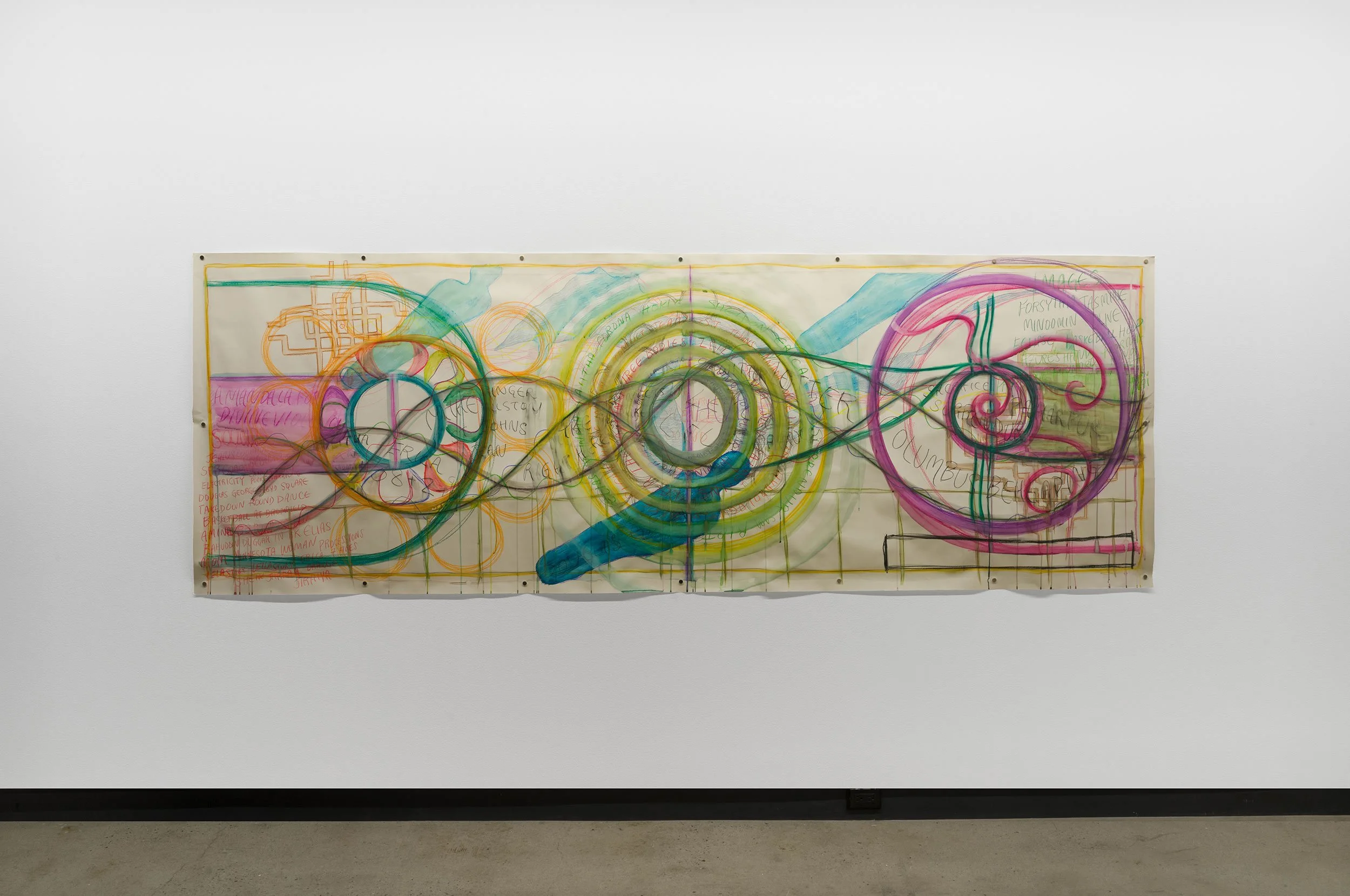
Mandala 01
Aquarelle crayon on paper.“Hi, can I join you?” “It depends what your intentions are.” Karthik Pandian’s மனசு (manasu) offers a sprawling, riverine account of relationship-building and bridging distance. The film restages the artist’s first meeting with American Indian Movement activist Mike Forcia at an encampment for unhoused Native people in Minneapolis, MN in 2021. Using re-enactment and outtakes to recount that fateful encounter, the film chronicles the pair’s subsequent collaborations which encompass the larger Forsythia cycle: public performance, music, ceremony, and artmaking.
In Pandian’s ancestral South Indian language of Tamil, மனசு (manasu) means both “heart” and “mind.” The film seeks to repair this connection sundered by the English language, Enlightenment, and colonialism, alighting along the way on additional couplings: murky translations, confluences of rivers, and kinship found in shared “Indian-ness” across Turtle Island and South Asia, to offer ways of working together in difference. In Pandian’s work, difference can be seen as a source of strength with the potential to animate movements—here seen through the laughter, discomfort, and earnest connection necessary to truly move together.
Pandian’s Forsythia cycleis a multifaceted project which originated in the 2020 uprising in Minneapolis and activists’ toppling of Minnesota’s monument to Christopher Columbus. The project is rooted in long-term collaboration to address colonization, translation, responsibility, and accountability. Encompassing film, performance, and installation, the Forsythia cycle seeks to cultivate the relations necessary to imagine a survivable future, and new ways of imagining culture in exile, diaspora, and settler colonial contexts.
மனசு (manasu) is presented alongside Mandala 01, a large-scale drawing by the artist which visualizes the relationships, connections, and structure of the Forsythia cycle. Shaped as a mandala with concentric circles and wandering lines, the drawing references Hindu spirituality and non-linear conceptions of time to provide an overview of Pandian’s project.
Karthik Pandian is an artist working to unsettle colonial time. He uses film, sculpture, drawing, and performance to find openings into collective liberation. Supported by a Creative Capital Award (2022) and a MacDowell Fellowship (2024), Karthik is currently working on his debut feature film, Lucid Decapitation. The film is a collaboration with Mike Forcia, a Bad River Anishinaabe and American Indian Movement activist who orchestrated the takedown of the Columbus monument at the Minnesota State Capitol in June 2020.
Karthik has presented his work internationally at exhibition venues such as the Whitney Museum of American Art (New York), the Hammer Museum (Los Angeles), and the Palais de Tokyo (Paris), and on digital platforms such as the Criterion Channel and Triple Canopy. He is a professor of Art, Film, and Visual Studies at Harvard University and a guide, certified in offering Lama Rod Owens’ Seven Homecomings practice.
-
Mixed media sound installation, bass transducers, servo fan, car amplifier, speaker wire, computer power source, iPhone, exhaust hose.
Courtesy the artist.
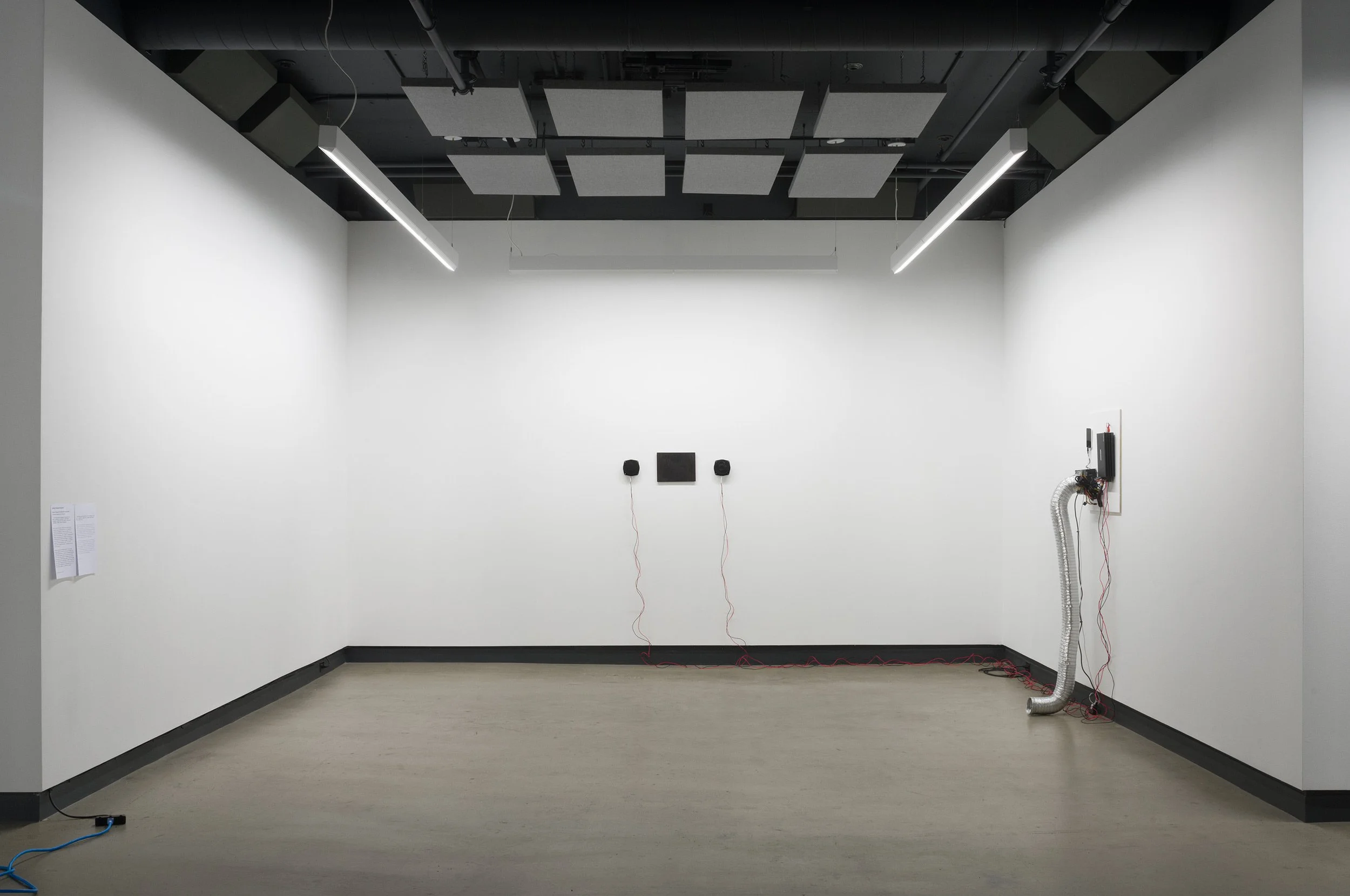
Knockin’ Pictures materializes Toussaint-Baptiste’s research into sub-bass and architecture, which has encompassed lowrider car culture, DIY sound systems, sonic weapons, and the felt effects of these technologies on the individual. Toussaint-Baptiste identifies bass as an ambivalent, inescapable aspect of urban experience that particularly affects Black and Brown communities—such as proximity to highways or heavy industries. At the same time, the artist celebrates the capacity of bass to claim spatial agency.Composed of a DIY car sound system and a metal plate flanked by transducers, Knockin’ Pictures Off the Wall underscores the haptic properties of bass. Toussaint-Baptiste’s sculpture emits rhythmic thudding as subwoofers shake the wall, causing the metal plate to tap a fastener beneath it, the result of subwoofers in creative, iconoclastic misuse. Knockin’ Pictures inverts the logic of sub-bass and sound: whereas sub-bass is usually a byproduct of sound, in this work inaudible bass causes audible sound.
Jeremy Toussaint-Baptiste’s work, spanning roles as an artist, composer, and performer, considers errant relations that push toward the limits of subjectivity.
Toussaint-Baptiste’s fellowships and awards include the Camargo Foundation Core Program Fellowship (Cassis), Bemis Center for Contemporary Arts Sound artist-in-residence (Omaha), the Jerome Foundation AIRspace Residency at Abrons Arts Center, Issue Project Room 2017 artist-in-residence, the Rauschenberg Residency 381 (New York) and the Bessie Award for Outstanding Music Composition and Sound Design (2018).
Recent exhibitions and performances include Hauser & Wirth (Los Angeles), The Institute of Contemporary Art at VCU, 1708 Gallery (Richmond), Berlin Atonal, MoMA PS1, Performance Space, The Kitchen, The Studio Museum in Harlem (New York), and Philadelphia Museum of Art. They are an Assistant Professor in Sculpture + Extended Media at Virginia Commonwealth University and a current Triple Canopy Fellow.
“Although indebted to the decades-long histories of conceptual art and institutional critique, which have prodded at exhibition-making from all sides, The Art Gallery Problem is envisioned not simply as a critique of gallery norms. Rather, it foregrounds ways of seeing objects beyond existing traditions of ownership, spectatorship, and display.”
Fraser McCallum Fraser McCallum is a curator and arts worker of settler Euro-Canadian ancestry based in Toronto, and Interim Assistant Curator at The Blackwood. Past curatorial projects include On Butterfly Logic (Inari Sandell, 2025), Dignity Images (American Artist, 2021); four-part program series Here, Better, Now (2023); and six-part program Nearshore Gatherings (2022). He co-curated Running with Concepts: The Mediatic Edition (with Alison Cooley), the 2021 Galleries Ontario Program of the Year, a virtual public program, fellowship, experimental conference, and publication. Fraser holds a Master of Visual Studies from the University of Toronto (2016). He has participated in residencies supported by the Salt Spring Island Arts Council (2017), and Banff Research in Culture (2015).

Dazibao thanks the curator, the artists and The Blackwood for their generous collaboration as well as its advisory committee for their support. This exhibition was first presented by The Blackwood, January 8 – March 5, 2025, with the support of the University of Toronto Mississauga, the Canada Council for the Arts, the Ontario Arts Council, the Jackman Humanities Institute, the Instituto Italiano di Cultura, and the Mondriaan Fund.
Dazibao would also like to thank Nathalie de Blois for the French translation of the essay and the descriptions of the works.
Dazibao receives financial support from the Conseil des arts et des lettres du Québec, the Canada Council for the Arts, the Conseil des arts de Montréal, the ministère de la Culture et des Communications and the Ville de Montréal.
Dazibao acknowledges that it is located on the unceded territory of the Kanien'kehá: ka Nation and that Tiohtiá:ke / Montreal is historically known as a gathering place for many First Nations, and today, is home to a diverse population of Indigenous as well as other peoples. Guided by ethics of respect, listening, and awareness, Dazibao commits to a continued reflection regarding the deep-rooted and systemic challenges tied to accessibility and inclusivity in the arts and beyond, and endeavors to apply such reflections to all aspects of its activities and governance.