
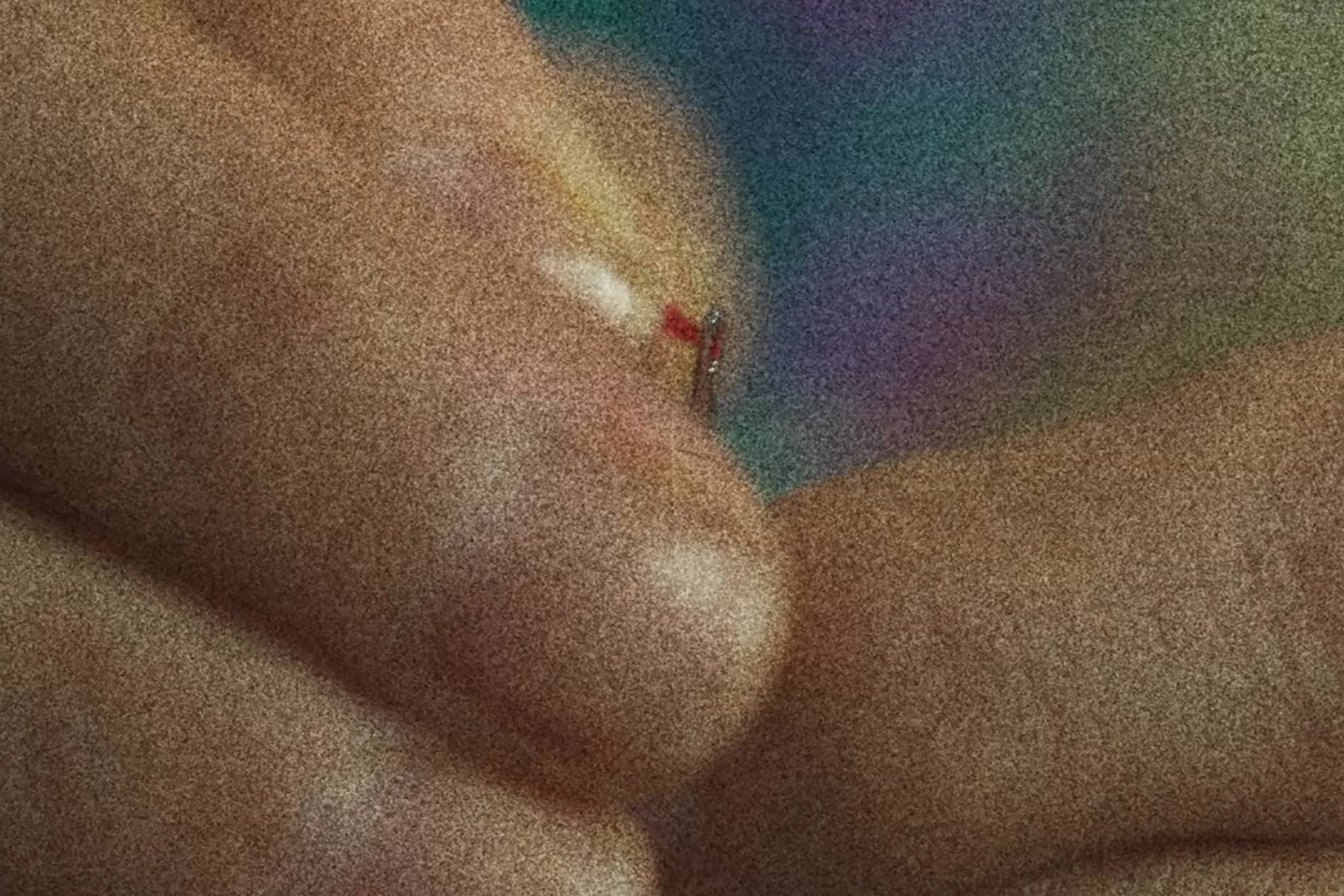
© Andre Solis Barrios, The Needle and the Drum (2020)

Carte blanche to Daniela Paglione — After the Image: Traces of Family Memory
On September 24, 2026 at 7 pm
Seats are limited and admission is on a first-come, first-served basis. Please arrive a few minutes early.
The dv_vd series is an initiative by Vidéographe and Dazibao. The aim of this collaboration is to create a dialogue between the centre’s collection and the current video art scene. The filmmaker and curator presents After the Image: Traces of Family Memory, a program of experimental works that explore family memory, domestic archives, and the ways images transform, fragment, and recompose over time.
The familial gaze, a concept developed by author and professor Marianne Hirsch, positions family images as intimate, constructed spaces in which memory is preserved even as it is quietly shaped by social and cultural structures. Rather than focusing on extraordinary material worlds, the familial gaze attends to “the extraordinary ordinariness of intimate social worlds.”¹ Seen this way, family images produce an impression of coherence and continuity, even as memory, identity, and ideologies are built and transformed over time. The experimental image in movement, however, unsettles this apparent stability by revealing the fragmentary, mediated, and constructed nature of remembrance.
Through processes of fragmentation, re-editing, and recontextualization, using grain, snow, and degradation, experimental works mobilize the materiality of the image as a material of memory in its own right. Visual alterations are not simply aesthetic flaws; they become traces of time, of forgetting, and of transmission. The deterioration of the image is the visible manifestation, revealing intimate and inherited memories that appear in all their fragility and their continual reconstruction.
Through a selection of experimental films drawn from domestic archives, the program After the Image explores passages from private family memory to a public act of viewing. By exposing these images in a collective space, the works shift the position of the viewer, who becomes less a passive observer than a witness to a memory that is partial, subjective, and emotionally charged. This encounter with the memories of others raises questions of proximity, authorship, and the ethics of the gaze, while revealing the family archive as a space of negotiation where individual memory, collective history, and cultural identity meet.
The program’s structure progresses from opening works that present relatively stable and legible family narratives toward increasingly pronounced visual degradation. This slow erosion reveals the material degradation of the image as a parallel to the deconstruction of memory itself. As the program unfolds, representations of intimacy become less fixed and more unstable, allowing the texturally deteriorated image in movement to emerge as a space in which memory is continually reconstructed, deconstructed, and mediated. Family archives are never fixed traces of the past; they are shifting constructions, shaped by time, experience, and the gaze. In letting the physical degradation of the image become the visible matter of memory, artists working with the experimental image in movement reveal that the act of remembering is always fragmentary, transformed, and endlessly recomposed.
1 Marianne Hirsch, ed., The Familial Gaze (Hanover, NH: Dartmouth College Press, 1999), https://archive.org/details/familialgaze0000unse.
Program — 47 min
Luc Courchesne, Poulette at seven months (1984) — 3 min 10 s
Vern Hume, Lamented Moments / Desired Objects (1988) — 13 min 8 s
Andrés Solis Barrios, The Needle and the Drum (2020) — 14 min 12 s
Guillaume Vallée, Grand-maman Piano (2020) — 5 min
Louise Bourque, Bye Bye Now (2022) — 9 min 6 s
Louise Bourque, Fissures (1999) — 2 min 30 s
Born in Montréal, Daniela Paglione is an independent experimental filmmaker, photographer, and emerging curator. She holds a degree in Communication Studies from Concordia University, where she specialized in her passion, experimental cinema. Her work has been presented in both national and international cinematic and cultural contexts, including screenings at Rencontres Internationales Paris / Berlin, Porto Femme International Film Festival, and Festival International du Film sur l’Art. She also contributes writing on films and festivals to Offscreen, an online film journal. Since 2019, Daniela has been creating short films independently, with a practice that explores themes of the ego, death, memory, and the unconscious.

Program
Dazibao thanks the artists, Daniela Paglione and Vidéographe for their generous collaboration as well as its advisory committee for their support.
Dazibao receives financial support from the Conseil des arts et des lettres du Québec, the Canada Council for the Arts, the Conseil des arts de Montréal, the ministère de la Culture et des Communications and the Ville de Montréal.
Dazibao acknowledges that it is located on the unceded territory of the Kanien'kehá: ka Nation and that Tiohtiá:ke / Montreal is historically known as a gathering place for many First Nations, and today, is home to a diverse population of Indigenous as well as other peoples. Guided by ethics of respect, listening, and awareness, Dazibao commits to a continued reflection regarding the deep-rooted and systemic challenges tied to accessibility and inclusivity in the arts and beyond, and endeavors to apply such reflections to all aspects of its activities and governance.